Transfer aids and patient lifts
Moving from bed to chair is one of the riskiest moments of the day. The right aid protects both people involved.
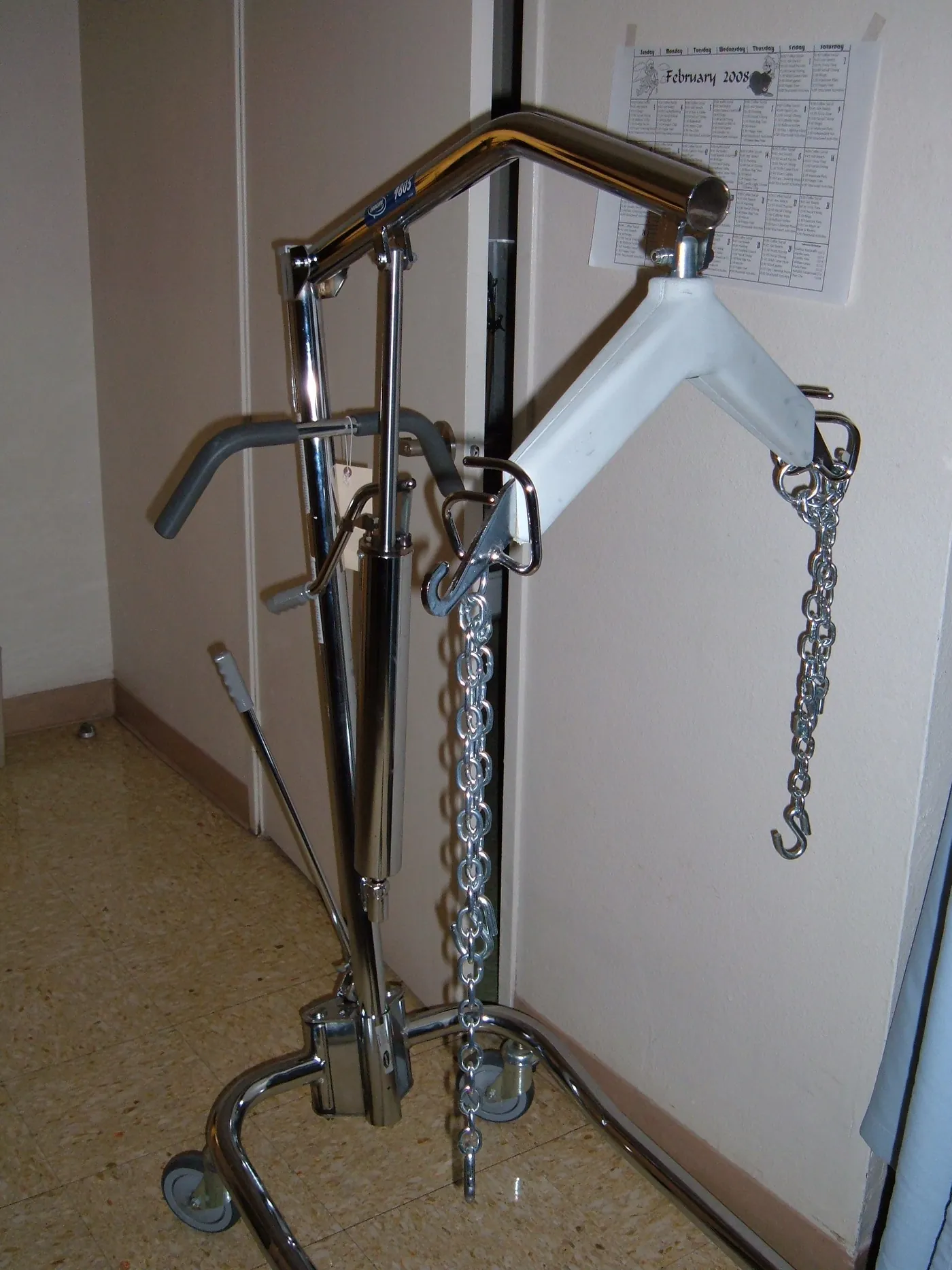
A transfer is any move from one surface to another: bed to wheelchair, chair to toilet, car seat to wheelchair. For someone with limited strength or balance, and for the person helping them, transfers carry a real risk of falls and back injuries. A range of equipment exists to make them safer. Almost all of it works best after someone has been shown how to use it.
Simple aids
- Transfer boards bridge the gap between two seats so the person can slide across in a seated position.
- Transfer belts give a helper a secure handhold around the waist instead of pulling on arms or clothing.
- Bed rails and poles fixed beside the bed give something solid to push up from.
- Swivel cushions help when turning to get in and out of a car seat.
Standing aids
Some people can bear weight on their legs but cannot stand up unaided. Standing and turning aids provide a platform for the feet and something to hold, so a helper can turn the person between seats without lifting them.
Mobile hoists
A mobile hoist, often called a patient lift, uses a sling and a lifting arm to raise a person who cannot bear weight. The base rolls on castors so the person can be moved a short distance and lowered into a chair, bed or commode. Ceiling track hoists do the same from a rail fixed overhead and need less floor space.
Slings
The sling is as important as the hoist. Slings come in different shapes and sizes for different purposes, and the wrong size or type can be unsafe. Sling selection should be made by a trained professional, and slings should be checked for wear before every use.
Training is not optional
Hoists and standing aids are safe when used correctly and dangerous when improvised. Anyone who will operate one at home should be shown by an occupational therapist, nurse or the supplier's trained staff, and should practise while the trainer watches. Keep the instructions with the equipment.
Space and routine
Hoists need clear floor space and room to turn, and the legs of the base must fit under the bed or chair. Plan the route, clear it before each transfer, and never rush. See home hospital beds for the other half of the setup.