Choosing a walking cane
A cane is the simplest walking aid, and the easiest to get slightly wrong. What to look at before you rely on one.
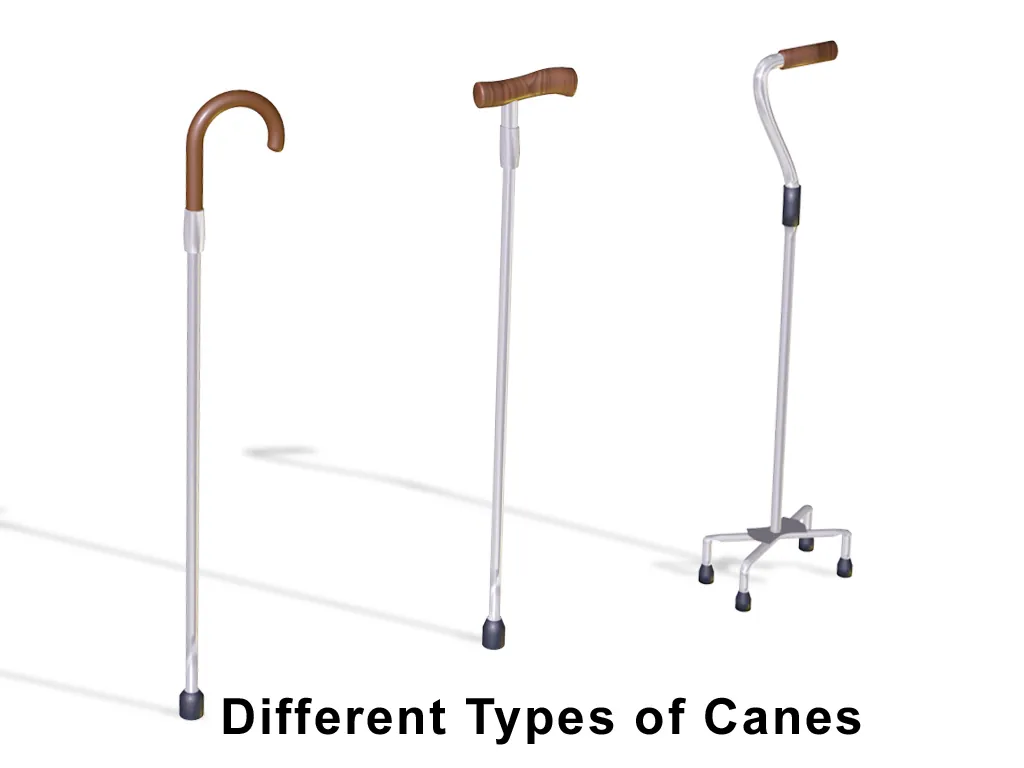
A cane takes a little weight off one leg and gives you an extra point of contact with the ground. That sounds modest, but for many people it is the difference between walking with confidence and avoiding walks altogether. Because canes are cheap and easy to find, they are also often bought without advice, used at the wrong height, or held in the wrong hand. This page explains the parts of a cane and the questions worth asking a physical therapist or other clinician before you choose one.
Handles
The handle is where comfort is won or lost. The classic crook or round handle hooks over an arm or a counter edge, which is handy, but it concentrates pressure in a small area of the palm. Offset handles place the grip directly over the shaft so weight travels straight down, which many people find steadier. Ergonomic or palm-shaped grips spread pressure across the hand and are often suggested for people with sore joints. A good test is simple: hold it for a few minutes, not a few seconds.
Bases and tips
A single-tip cane is light and easy to swing. A quad cane has a small platform with four feet; it can stand on its own and offers a wider base, but it only works well when all four feet touch the ground together, which makes it slower on stairs and uneven paths. Whatever the base, the rubber tip matters: it should be firm, grooved and free of cracks. Worn tips are one of the most common, and most easily fixed, reasons a cane slips.
Height
Most adjustable canes change height in steps using a push-button pin. A common starting point taught by clinicians is that, standing upright with arms relaxed, the top of the handle sits around the crease of the wrist, so the elbow bends slightly when you hold it. Shoes change the measurement, so set the height wearing the shoes you usually walk in. If the cane feels as if it pushes your shoulder up, or makes you stoop, ask for the height to be checked.
Which hand
People are often surprised to learn that a cane is usually held on the side opposite the weaker or painful leg, so it moves forward together with that leg. This is general guidance, not a rule for everyone, and the right pattern depends on why the cane is being used. A short session with a physical therapist to practise walking, turning and stairs is time well spent.
When a cane may not be enough
If you find yourself leaning heavily on the cane, holding furniture as you go, or feeling unsteady when you turn, those are signs to mention to a professional. A walker or rollator may give more support, and a fall-risk check can uncover causes that a walking aid alone will not solve. See walkers and rollators for the next step up.
Small habits that help
- Keep the cane within reach of the bed and favourite chair, not leaning in a corner.
- Use a wrist strap or a clip so it does not fall when you open a door.
- Check the tip and the height pin every few weeks.
- Take extra care on wet floors, ice and loose rugs, where even a good tip can skid.