Ramps, thresholds and stairlifts
Steps are the most common barrier at home. Options range from a small threshold wedge to a permanent ramp or stairlift.

A single step at the front door can stop a wheelchair, and a flight of stairs can confine someone to one floor of their own home. Solutions range from small and portable to permanent building work. Which is right depends on the person, the home and how long the need is expected to last, which is why an assessment is a good starting point.
Threshold ramps
Raised door sills and small changes in floor level catch wheels and toes. Rubber or aluminium threshold ramps smooth out these small rises and are among the simplest changes you can make. Check that the ramp sits firmly and does not create a new trip edge at either end.
Portable ramps
Folding and telescopic ramps can bridge one or two steps and be carried in a car. They are useful for visits and temporary needs, but they must be long enough for the height of the step, positioned securely, and used with care, especially in wet or icy weather.
Permanent ramps
A permanent ramp needs a gentle slope, which means it can take up a surprising amount of space; steeper ramps are hard to push up and dangerous to come down. Handrails, edge protection, a non-slip surface and level landings at the top and bottom are standard features. Local building rules may apply, so involve someone who knows them.
Stairlifts
A stairlift carries a seated person along a rail fixed to the stairs. Straight staircases are the simplest to fit; curved or split flights need rails made to measure. The user needs to be able to transfer on and off the seat safely at both ends, and the stairs must remain usable for everyone else in the house.
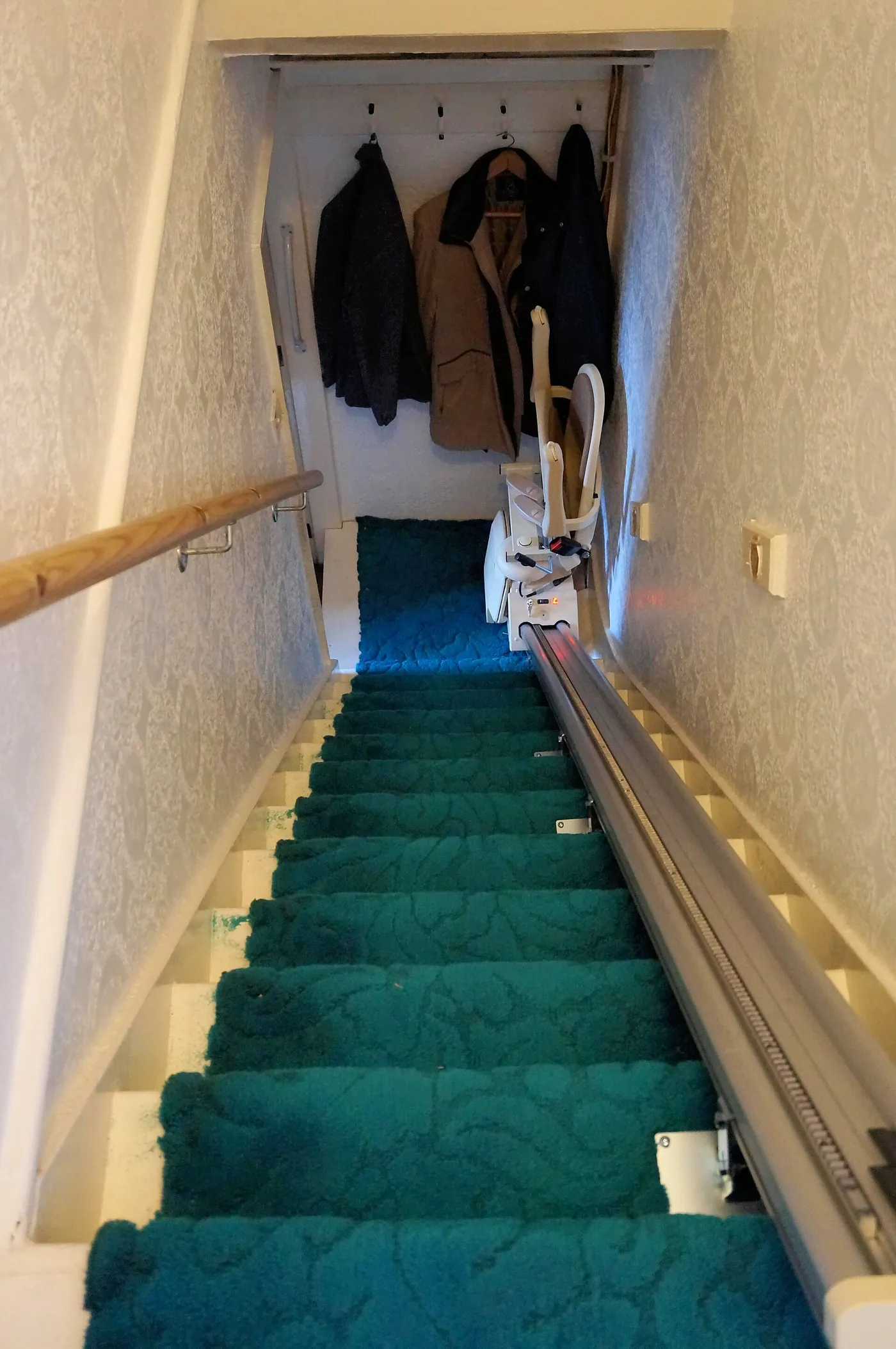
Other options
Sometimes the better answer is to change how the home is used: a bedroom moved downstairs, a downstairs toilet added, a different entrance used. Through-floor lifts and home elevators exist for some homes but are major works.
Questions to ask
- Is the need short-term or long-term?
- Who else uses the entrance or stairs?
- What happens in a power cut, or if the equipment breaks?
- Who services it, and how often?
See also preventing falls at home.